
Dental Implants· 5 min read
Single-Tooth Implants vs. Dental Bridges: Which Fix Protects Your Surrounding Teeth Long-Term?
Losing a single tooth—whether due to sports trauma, severe decay, or an unsuccessful root canal—presents an immediate choice for your oral health. While hiding a gap near the back of your mouth might be tempting, leaving a missing tooth unreplaced triggers a chain reaction of shifting teeth, bite misalignment, and jawbone loss.
When restoring a single missing tooth, the conversation almost always comes down to two primary treatments: a traditional fixed dental bridge or a modern dental implant.
While both options successfully fill the gap visually, they interact with your surrounding natural teeth and underlying jawbone in vastly different ways. Understanding how each restoration impacts your long-term oral biology will help you make the safest choice for your entire smile.
The Biological Reality of a Missing Tooth
To appreciate the difference between bridges and implants, it helps to understand what happens beneath the surface when a tooth is lost.
Your natural tooth roots do more than just anchor your tooth in place; every time you chew, the root sends micro-vibrations into the surrounding jawbone. This stimulation signals your body to keep sending calcium and nutrients to maintain that bone mass.
When a tooth root is removed:
- Jawbone Resorption: The jawbone in that specific area loses its biological stimulation and begins to shrink (resorb) over time.
- Tooth Drifting: Neighboring teeth gradually tilt and shift into the empty space, altering your natural bite alignment.
- Opposing Tooth Super-Eruption: The tooth directly above or below the gap begins to drift out of its socket searching for a contact point to chew against.
Option 1: Traditional Fixed Dental Bridges
For decades, a fixed bridge was the standard solution for replacing a single missing tooth. A dental bridge consists of an artificial tooth (pontic) held in place by two dental crowns that are cemented onto the healthy teeth on either side of the gap (abutment teeth).
TRADITIONAL DENTAL BRIDGE STRUCTURE
[ Crown ] ─── [ Pontic (Fake Tooth) ] ─── [ Crown ]
│ │
(Healthy Tooth shaved down) (Healthy Tooth shaved down)
The Pros of a Dental Bridge
- Faster Initial Timeline: A traditional bridge can typically be completed in two to three weeks over two office visits.
- No Surgery Required: Because a bridge rests above the gumline, it requires no surgical placement or deep bone integration.
The Hidden Impact on Surrounding Teeth
- Permanent Removal of Healthy Enamel: To place a bridge, the two adjacent teeth—even if they are perfectly healthy and free of decay—must be permanently shaved down to accommodate the supportive crowns.
- Increased Risk of Decay and Root Canals: Trimming down natural enamel exposes underlying dentin, increasing the vulnerability of abutment teeth to recurrent decay around crown margins.
- Ongoing Bone Loss: A bridge sits entirely above the gumline. Because there is no implant post filling the socket beneath the artificial tooth, the underlying jawbone continues to shrink over time, often creating an unsightly gap beneath the pontic where food particles easily collect.
Option 2: Single-Tooth Dental Implants
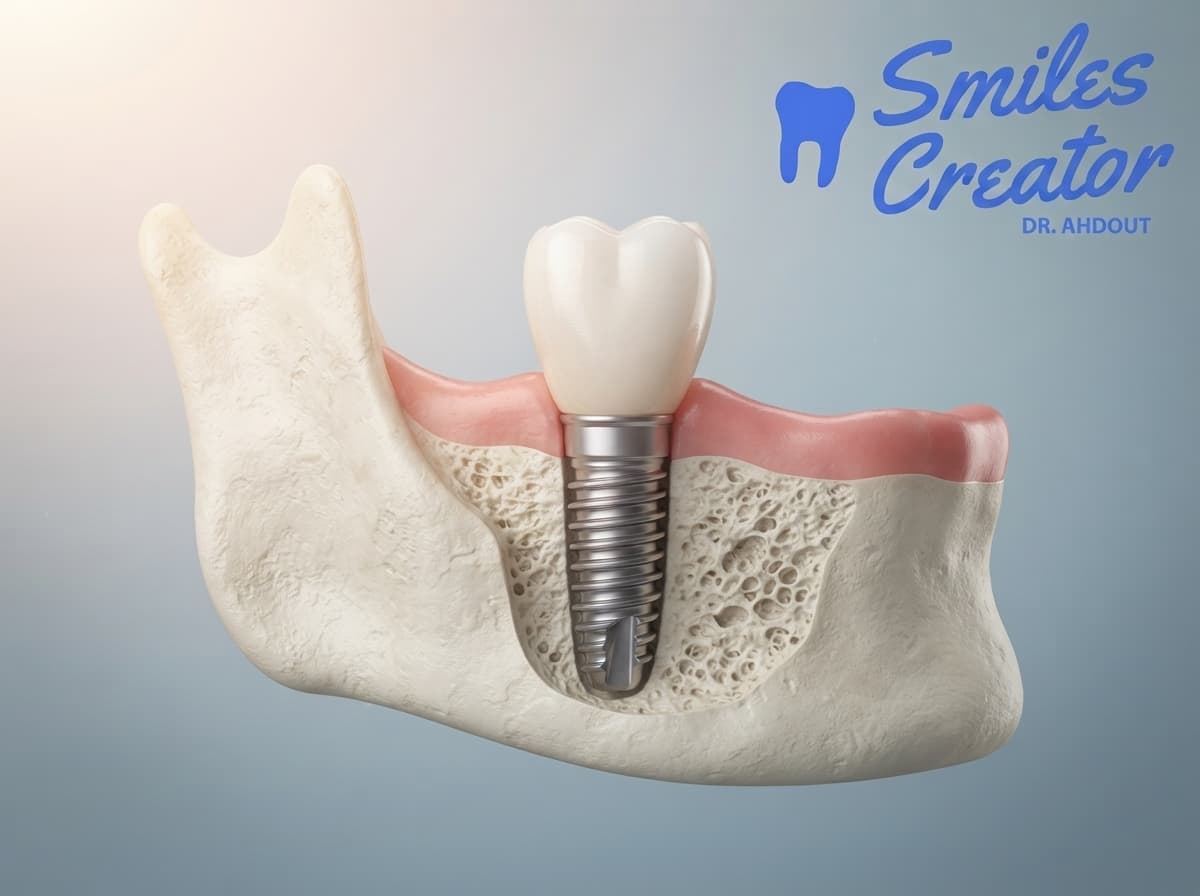
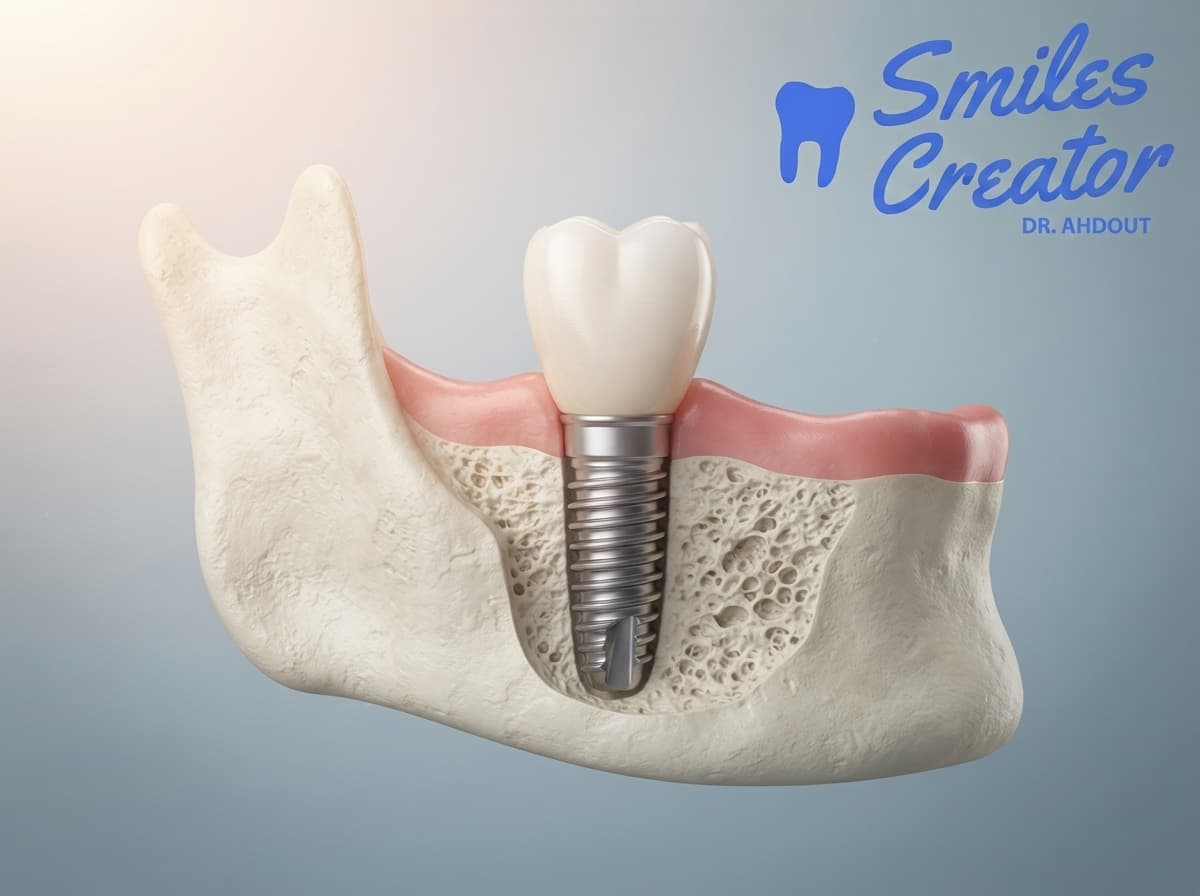
A dental implant is a complete bio-engineered tooth replacement. It consists of three components: a small titanium post inserted into the jawbone acting as a natural root, an abutment connector, and a custom porcelain crown.
SINGLE-TOOTH DENTAL IMPLANT STRUCTURE
[ Porcelain Crown ]
│
[ Abutment Connector ]
│
[ Titanium Implant Post ] ← (Integrates directly into jawbone)
The Long-Term Advantages of a Dental Implant
- Complete Protection of Neighboring Teeth: An implant is completely self-supporting. The adjacent natural teeth are left untouched, retaining 100% of their natural protective enamel.
- Preservation of Jawbone Density: Through a natural biological process called osseointegration, the titanium implant post fuses directly with your jawbone. Chewing pressure stimulates the bone just like a natural root, preventing jawbone shrinkage permanently.
- Exceptional Longevity: While dental bridges typically require replacement every 10 to 15 years due to wear or recurrent decay under abutment crowns, a well-maintained dental implant can last a lifetime.
- Simplified Daily Hygiene: Cleaning around an implant is identical to caring for a natural tooth—simply brush and floss normally. Bridges require specialized threaders to clean underneath the artificial tooth.
Side-by-Side Comparison: Implant vs. Bridge
Feature
Single-Tooth Dental Implant
Traditional Fixed Bridge
Impact on Adjacent Teeth
Zero impact; neighboring teeth are left untouched.
Adjacent healthy teeth must be permanently shaved down.
Jawbone Preservation
Fuses with bone to prevent shrinkage and bone loss.
Does not stimulate bone; underlying jawbone shrinks over time.
Average Lifespan
25+ years to a lifetime with proper care.
10 to 15 years before replacement is often needed.
Daily Hygiene
Brush and floss normally between teeth.
Requires special floss threaders to clean under the pontic.
Treatment Timeline
3 to 6 months for complete bone integration.
2 to 3 weeks over two appointments.
Simple Answers to Common Questions
Is getting a dental implant painful?
No. The implant placement procedure is performed under local anesthesia or light sedation, making it entirely comfortable. Most patients report that recovering from an implant placement involves less post-operative tenderness than having a tooth extracted.
What if I already have a bridge that failed?
It is very common to replace a failed or decaying dental bridge with a modern dental implant. Once the old bridge is removed and any underlying decay is treated, an implant can be placed to restore the space independently.
Can anyone get a single-tooth implant?
Most adults in good general health are candidates for dental implants. Having adequate jawbone density and healthy gums ensures long-term success. If bone loss has already occurred, gentle bone grafting can easily rebuild the area prior to placement.
Protect Your Smile with Smiles Creator – Dr. Nader Ahdout
Replacing a missing tooth is about far more than filling a gap in your smile—it is about preserving the structural health of your surrounding natural teeth and maintaining a strong jawbone for life.
At Smiles Creator, Dr. Nader Ahdout emphasizes conservative, long-lasting restorative solutions tailored to your unique anatomy. Using advanced 3D digital intraoral scanning, precise surgical planning, and high-grade aesthetic porcelain, Dr. Ahdout restores missing teeth comfortably while keeping your surrounding healthy enamel intact.
Invest in a long-lasting, natural-looking smile today!
Contact Our Woodland Hills Office Today:
- Practice Name: Smiles Creator – Dr. Nader Ahdout
- Address: 22116 Ventura Blvd, Woodland Hills, CA 91364
- Phone Number: (818) 340-3062
- Website: dr-ahdout.com
NA
Published by Dr. Nader Ahdout, DDS. This article is for general information and is not a substitute for a personal examination and diagnosis.


Trusted Dentist in Woodland Hills for Comprehensive Dental Care
Schedule your free consultation with Dr. Ahdout and experience high-quality cosmetic and family dentistry tailored to your smile needs.