
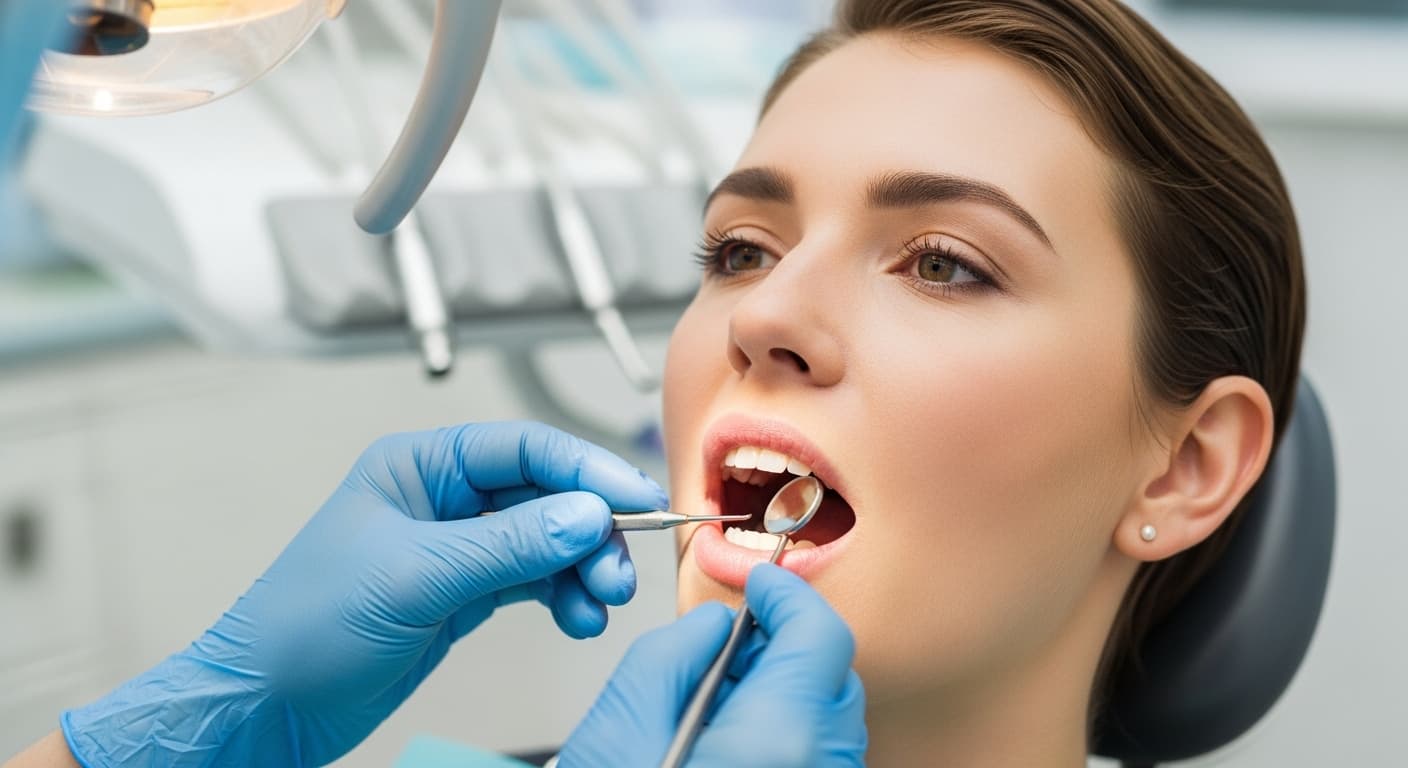
Wisdom Teeth Removal in Woodland Hills, CA
Wisdom teeth are the third molars at the very back of the mouth, and they generally arrive between seventeen and twenty-five. The human jaw is smaller than it used to be, and for most people there simply is not room for them.
When there is not, they become impacted — trapped against the tooth in front, angled sideways, or partially erupted through the gum. That is when problems begin.
Dr. Nader Ahdout has practised in Woodland Hills since 1993 and performs wisdom tooth extractions with sedation options available, same-week appointments, and emergency care when a tooth becomes acutely painful.

Do Wisdom Teeth Always Need to Come Out?
No — and this deserves stating plainly, because the assumption that every wisdom tooth must be extracted is not supported.
A wisdom tooth can stay if it is fully erupted, correctly positioned, functional in your bite, cleanable with a brush and floss, and free of decay and gum inflammation.
A wisdom tooth should come out if it is causing or is very likely to cause a problem.
Reasons for Removal
- Impaction. The tooth cannot erupt into a functional position and is trapped in bone or against the adjacent molar
- Pericoronitis. A flap of gum partially covering an erupting tooth traps food and bacteria beneath it, producing painful, recurrent infection. This is one of the most common presentations we see
- Decay. Wisdom teeth are extremely difficult to clean and frequently decay. Restoring them is often impractical
- Damage to the second molar. An angled wisdom tooth pressing against the root of the tooth in front can cause decay or resorption on that neighbour — losing a healthy, functional molar to protect one that is not
- Cyst formation around an unerupted tooth, which can destroy surrounding bone
- Gum disease in a region impossible to clean properly
- Orthodontic considerations. Sometimes recommended before or after treatment, though the belief that wisdom teeth cause front-tooth crowding is not well supported by evidence
- Pain, swelling or recurrent infection
Types of Impaction
| Type | Description | Typical complexity |
|---|---|---|
| Vertical | Upright but unable to fully erupt | Lower |
| Mesioangular | Angled forward toward the second molar | Moderate — the most common |
| Distoangular | Angled backward | Higher |
| Horizontal | Lying on its side | Highest |
| Soft tissue | Through bone, covered by gum only | Lower |
| Full bony | Completely encased in bone | Highest |
The Argument for Earlier Rather Than Later
If removal is indicated, the late teens to early twenties is generally the easier window:
- Roots are not fully formed, making removal less complex
- Bone is less dense and more elastic
- Healing is faster and complications less frequent
- Nerve proximity is often less of a concern before roots have developed fully
That is a reason to evaluate early — not a reason to remove healthy, asymptomatic, well-positioned teeth. The decision should follow imaging and examination, and we will tell you honestly if yours can stay.
What to Expect
Consultation and Imaging
We examine the area and take radiographs — typically a panoramic image showing all four wisdom teeth, their angulation, root development and their relationship to critical structures.
Two structures matter most: the inferior alveolar nerve, which runs through the lower jaw close to the roots of lower wisdom teeth and supplies sensation to the lip and chin, and the maxillary sinus above the upper wisdom teeth. Where a lower root appears to be in intimate contact with the nerve, we take a 3D cone beam scan to see the true relationship in three dimensions. See our technology.
This imaging is what allows us to plan a safe extraction — and to identify the small number of cases better referred to an oral and maxillofacial surgeon. We would rather refer you than take on a case that belongs in a surgical specialist's hands.
Anaesthesia and Sedation Options
- Local anaesthetic alone — sufficient for straightforward extractions
- Nitrous oxide with local anaesthetic — takes the edge off anxiety, wears off within minutes, and you can drive yourself home
- Oral conscious sedation — a tablet taken beforehand leaves you deeply relaxed and typically with little memory of the procedure. You will need someone to drive you
For anxious patients and for multi-tooth extractions, sedation makes a substantial difference to the experience.
The Extraction
For an erupted, well-positioned tooth: the tooth is loosened and lifted out. Minutes.
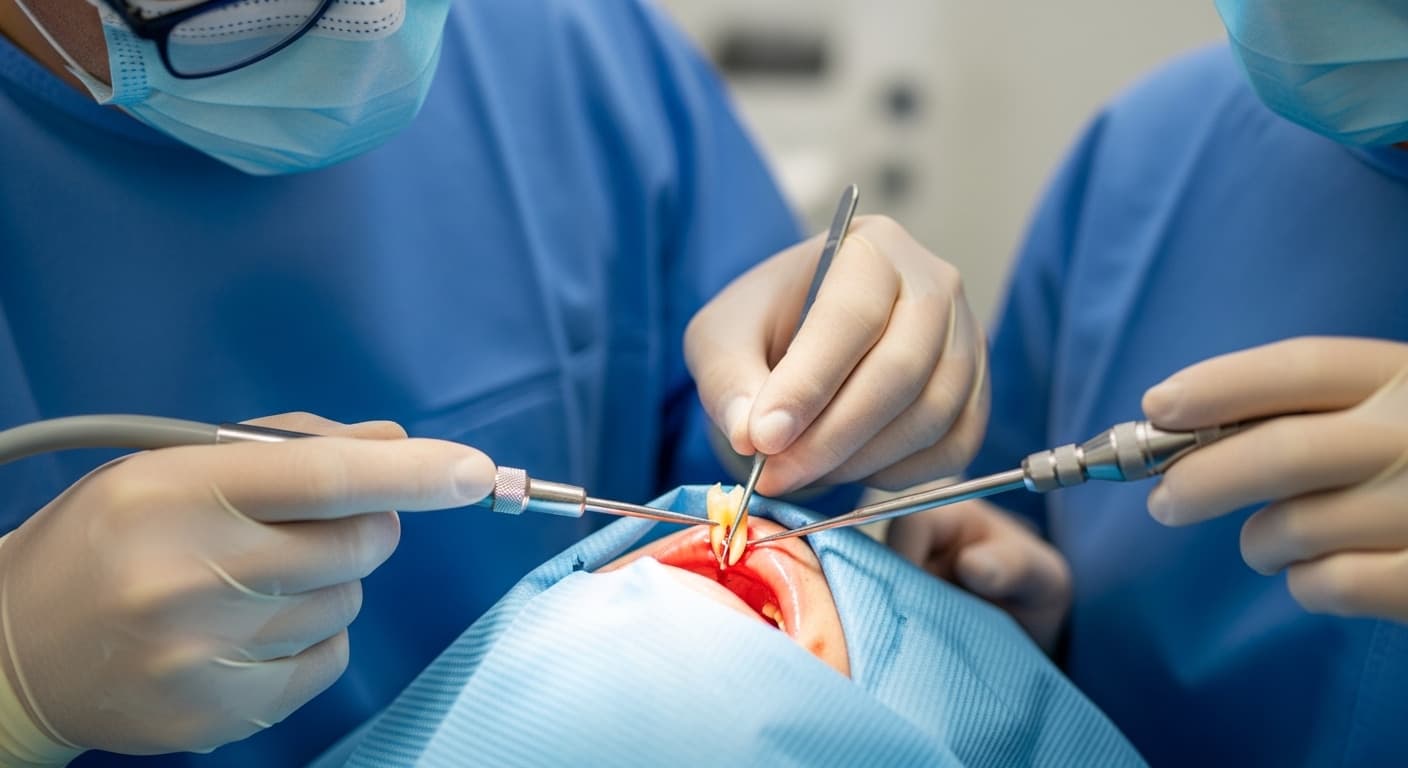
For an impacted tooth: a small incision is made in the gum, a conservative amount of bone covering the tooth is removed, and the tooth is often sectioned — divided into pieces — so each piece can be removed through a smaller opening. Sectioning sounds alarming and is actually the conservative approach: it removes far less bone than extracting the tooth whole. The site is then cleaned and stitches placed if needed.
You will feel pressure and hear noise, but not pain. Removing all four typically takes 45 to 90 minutes.

Recovery
The First 24 Hours — This Part Matters Most
- Bite firmly on gauze for 30 to 45 minutes. Replace as needed until bleeding slows
- Rest. No exercise, no heavy lifting, no bending
- Ice on the outside of the face, 20 minutes on and 20 off, for the first day. This is what limits swelling
- Take pain medication before the numbness wears off
- Soft, cool foods. Yoghurt, smoothies, apple sauce, lukewarm soup
- Keep your head elevated, including with an extra pillow overnight
Do not, for at least 24 hours and preferably 72:
- Use a straw. Suction dislodges the clot
- Smoke or vape. This is the single largest risk factor for dry socket, both from the suction and the chemical effect on healing
- Spit forcefully or rinse vigorously
- Drink alcohol or use mouthwash containing it
- Poke the site with your tongue or fingers
Days 2 to 7
- Begin gentle warm salt water rinses after 24 hours — half a teaspoon in a glass of warm water, several times daily, letting it fall out of your mouth rather than spitting
- Swelling peaks around day two or three, then subsides. This is normal and expected
- Return gradually to firmer foods
- Brush your other teeth normally; avoid the surgical sites initially
- Some bruising on the cheek or jaw may appear. It is harmless
- Jaw stiffness is common and eases over several days
Timeline
| Period | What to expect |
|---|---|
| Days 1-3 | Peak swelling and discomfort; soft diet; rest |
| Days 4-7 | Marked improvement; most people return to normal activity |
| 1-2 weeks | Stitches dissolve or are removed; sockets closing |
| 3-4 weeks | Soft tissue essentially healed |
| 3-6 months | Bone fills the socket completely |
Most patients take two to three days off from work or school. Physically demanding jobs may need longer.

Complications, Stated Honestly
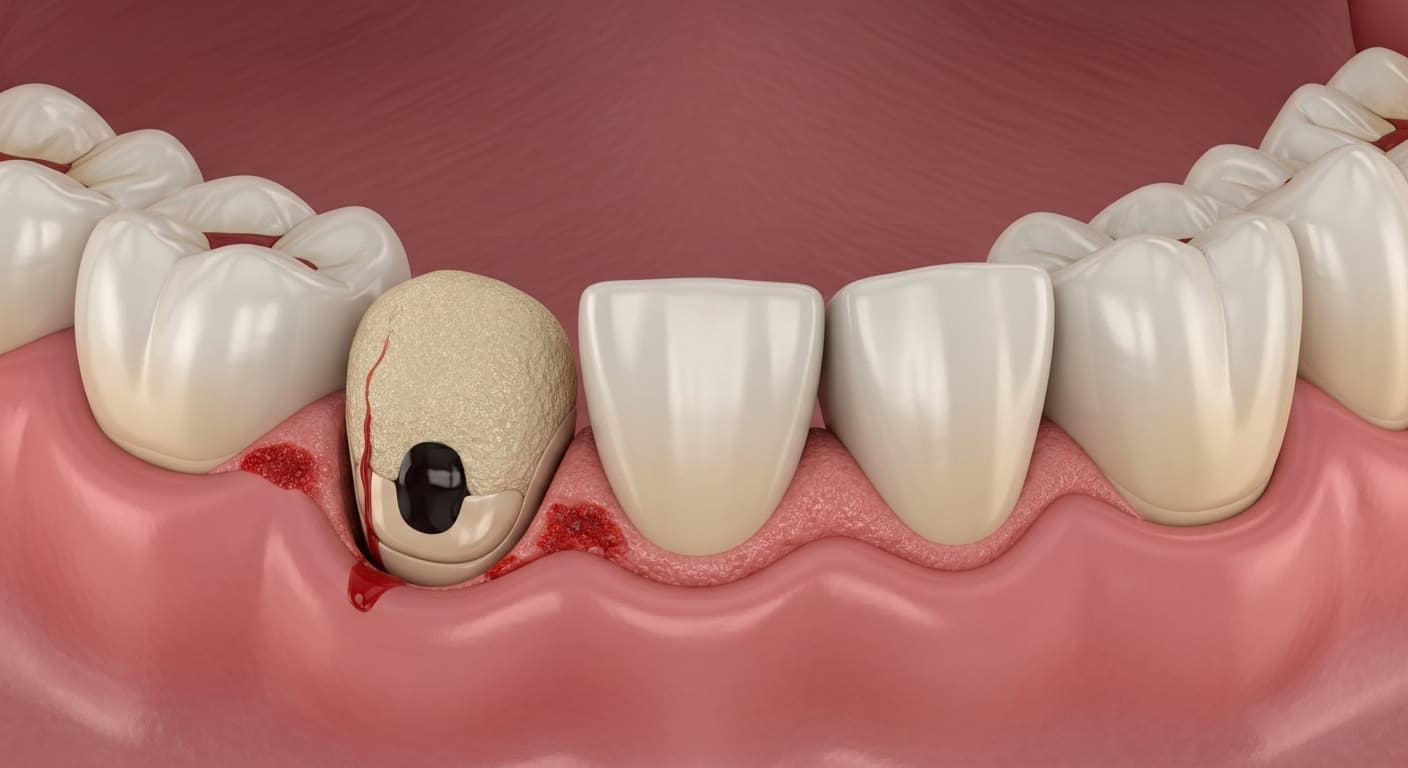
Dry socket (alveolar osteitis). Occurs in roughly 2 to 5 percent of extractions and considerably more in smokers. The blood clot protecting the socket is lost, exposing bone. It produces severe, throbbing pain typically starting three to five days afterwards, often radiating to the ear, and frequently a bad taste. It is treatable — we clean and dress the socket, and relief is usually rapid. Call us; do not endure it.
Infection. Uncommon. Signs are increasing pain and swelling after day three, fever, pus or a persistent bad taste.
Nerve involvement. The main risk of lower wisdom tooth removal. Temporary numbness or tingling of the lip, chin or tongue occurs in a small percentage of cases and usually resolves over weeks to months. Permanent alteration is rare. This is precisely why 3D imaging is used when roots appear close to the nerve, and why some cases are referred to a surgeon.
Sinus communication. Possible with upper wisdom teeth whose roots sit near the sinus. Usually managed with precautions and heals without issue.
Prolonged bleeding, jaw stiffness and bruising are common but generally self-limiting.
Call Us If
Bleeding does not slow after several hours of pressure; pain worsens after day three rather than improving; swelling increases after day three; you develop fever; you have difficulty swallowing or breathing; or numbness persists beyond a day after treatment.
Difficulty breathing or swallowing, or rapidly spreading facial swelling, is a medical emergency. Go to an emergency room.

How Much Does Wisdom Teeth Removal Cost?
| Extraction type | Typical range per tooth |
|---|---|
| Simple (erupted) | $200 – $400 |
| Soft tissue impaction | $300 – $550 |
| Partial bony impaction | $400 – $700 |
| Full bony impaction | $500 – $900 |
| Nitrous oxide sedation | $75 – $150 |
| Oral conscious sedation | $250 – $600 |
All four impacted wisdom teeth with sedation commonly totals $1,800 to $4,000.
Wisdom tooth extraction is medically necessary in most cases, and dental insurance typically covers a meaningful share — commonly 50 to 80 percent, subject to your annual maximum, deductible and any waiting period. Some medical plans contribute when the case involves significant surgical complexity. We verify your benefits and provide a written estimate before treatment, and offer payment plans.
A practical tip: if all four need removal and you are close to your annual maximum, ask us about the timing. Splitting treatment across two benefit years can materially reduce what you pay.

Why Choose Dr. Ahdout
- Thirty-plus years in practice, USC-trained, with extensive extraction experience
- Proper imaging before every case, including 3D cone beam scans where the nerve relationship needs assessing
- Sedation options — nitrous oxide and oral conscious sedation — because anxiety about this procedure is common and entirely reasonable
- Conservative technique. Sectioning teeth to remove less bone means less trauma and faster healing
- Socket preservation grafting where indicated, to maintain bone volume
- Honest referral. High-risk cases go to an oral and maxillofacial surgeon. Your safety comes before keeping the case
- Same-week and emergency appointments — pericoronitis is genuinely painful and should not wait
- A dental spa environment, 4.6 stars across 80 Google reviews
Book Your Wisdom Teeth Consultation
Whether your wisdom teeth are hurting now, your orthodontist has recommended evaluation, or you simply want to know where you stand, the consultation includes examination, imaging and a straight answer about whether removal is actually necessary.
Call (818) 340-3062 or book online.
Dr. Nader Ahdout, DDS · 22116 Ventura Blvd, Woodland Hills, CA 91364

Frequently Asked Questions
How much does wisdom teeth removal cost in Woodland Hills?
Costs range from $200 to $400 per tooth for a simple erupted extraction up to $500 to $900 for a full bony impaction, plus $75 to $600 for sedation depending on the type. All four impacted wisdom teeth with sedation commonly totals $1,800 to $4,000. Dental insurance typically covers 50 to 80 percent because the procedure is medically necessary in most cases.
How long does it take to recover from wisdom teeth removal?
Most patients take two to three days off work or school. Swelling peaks around day two or three then subsides, and most people feel substantially better by day four to seven. Soft tissue is essentially healed at three to four weeks, while bone fills the socket completely over three to six months.
Does wisdom teeth removal hurt?
Not during the procedure — the area is fully anaesthetised, and you feel pressure and hear noise rather than pain. Sedation options including nitrous oxide and oral conscious sedation are available for anxious patients. Afterwards, discomfort peaks in the first two to three days and is usually well controlled with prescribed or over-the-counter medication.
What is dry socket and how do I avoid it?
Dry socket occurs when the protective blood clot is lost from the socket, exposing bone, and produces severe throbbing pain typically three to five days after extraction. It affects roughly 2 to 5 percent of extractions and far more in smokers. Avoid it by not using straws, not smoking or vaping, and not spitting or rinsing forcefully for at least 72 hours. It is treatable — call the office rather than enduring it.
Do wisdom teeth have to be removed even if they do not hurt?
Not always. A wisdom tooth that is fully erupted, correctly positioned, functional, cleanable and free of decay and gum inflammation can stay. Removal is indicated when a tooth is impacted, causing recurrent infection, decaying, damaging the adjacent molar or forming a cyst. The decision should follow imaging and examination, not a blanket assumption.
Can all four wisdom teeth be removed at once?
Yes, and it is common. Removing all four in a single appointment means one recovery period rather than several and typically takes 45 to 90 minutes. Sedation makes the experience considerably more comfortable. Some patients prefer to have one side treated at a time so they can chew on the other, which is also reasonable.
Trusted Dentist in Woodland Hills for Comprehensive Dental Care
Schedule your free consultation with Dr. Ahdout and experience high-quality cosmetic and family dentistry tailored to your smile needs.
Visit Our Woodland Hills Office
Call Now
(818) 340-3062Opening Hours
- Mon
- 9 AM – 6 PM
- Tue
- 9 AM – 6 PM
- Wed
- 9 AM – 6 PM
- ThuToday
- 9 AM – 6 PM
- Fri
- 9 AM – 1:30 PM
- Sat
- Closed
- Sun
- Closed