

Invisalign in Woodland Hills, CA
Straightening your teeth no longer requires a mouth full of metal. Invisalign uses a series of clear, custom-made aligners to move your teeth into position gradually and discreetly — so most people around you will never notice you are in treatment.
At our Woodland Hills practice, Dr. Nader Ahdout has been treating patients since 1993 and combines more than three decades of restorative and cosmetic experience with digital treatment planning. That combination matters more than most patients realize: aligners move teeth, but an experienced dentist decides where those teeth should end up so that your bite functions correctly for the next twenty years, not just so the front six look straight in photographs.
We serve patients from Woodland Hills, Calabasas, Tarzana, West Hills, Canoga Park, Reseda and Topanga.
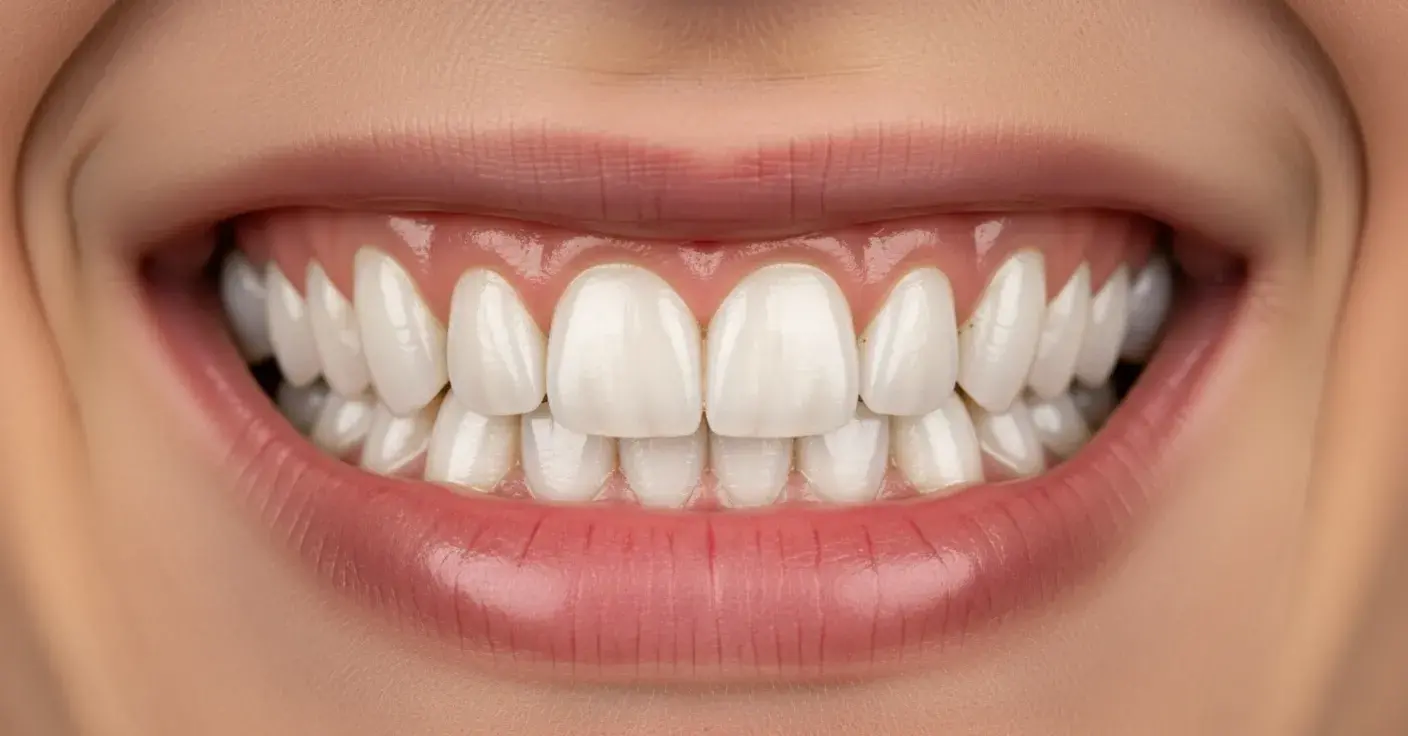
What Is Invisalign?
Invisalign is a clear aligner system that replaces the brackets and wires of traditional orthodontics with a sequence of removable trays. Each tray is manufactured from SmartTrack thermoplastic and is shaped slightly differently from the one before it. Worn in order, the trays apply light, continuous pressure that guides teeth along a planned path.
You wear each aligner for one to two weeks, then move to the next in the series. Most patients receive several aligners at a time, so office visits are typically spaced six to ten weeks apart rather than monthly.
Three characteristics separate Invisalign from fixed braces:
- It is removable. You take the aligners out to eat, drink anything other than water, brush and floss.
- It is nearly invisible. The trays are thin and transparent. At conversational distance, most people do not notice them.
- It is planned digitally before it begins. Your entire tooth movement sequence is mapped in software before the first aligner is manufactured, which means you can see a simulation of your projected result at the consultation.
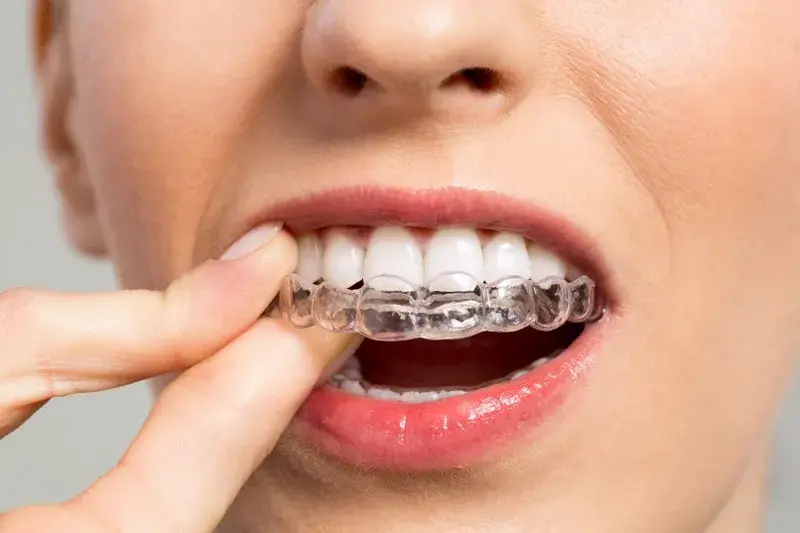
Conditions Invisalign Can Correct
Clear aligners have advanced considerably since the system launched. Today they routinely treat cases that once required fixed appliances:
- Crowding — teeth overlapping because the arch lacks space
- Spacing and gaps — including diastema between the front teeth
- Overbite — upper front teeth covering too much of the lower
- Underbite — lower teeth sitting ahead of the upper
- Crossbite — upper and lower teeth meeting in the wrong horizontal relationship
- Open bite — front teeth that do not meet when the back teeth are closed
- Orthodontic relapse — teeth that shifted after braces because retainers were abandoned
When Invisalign Is Not the Right Answer
Honesty here saves you money and time. Clear aligners are not universal. Cases involving severe skeletal discrepancies, teeth requiring significant vertical movement, or complex rotations of canines and premolars may be treated more predictably with fixed appliances or may require an orthodontist or oral surgeon. Patients who cannot commit to wearing the trays 20 to 22 hours a day will not get the planned result — aligners only work while they are in your mouth.
If your case falls outside what aligners handle well, we will tell you at the consultation and refer you appropriately rather than start a treatment that will disappoint you.
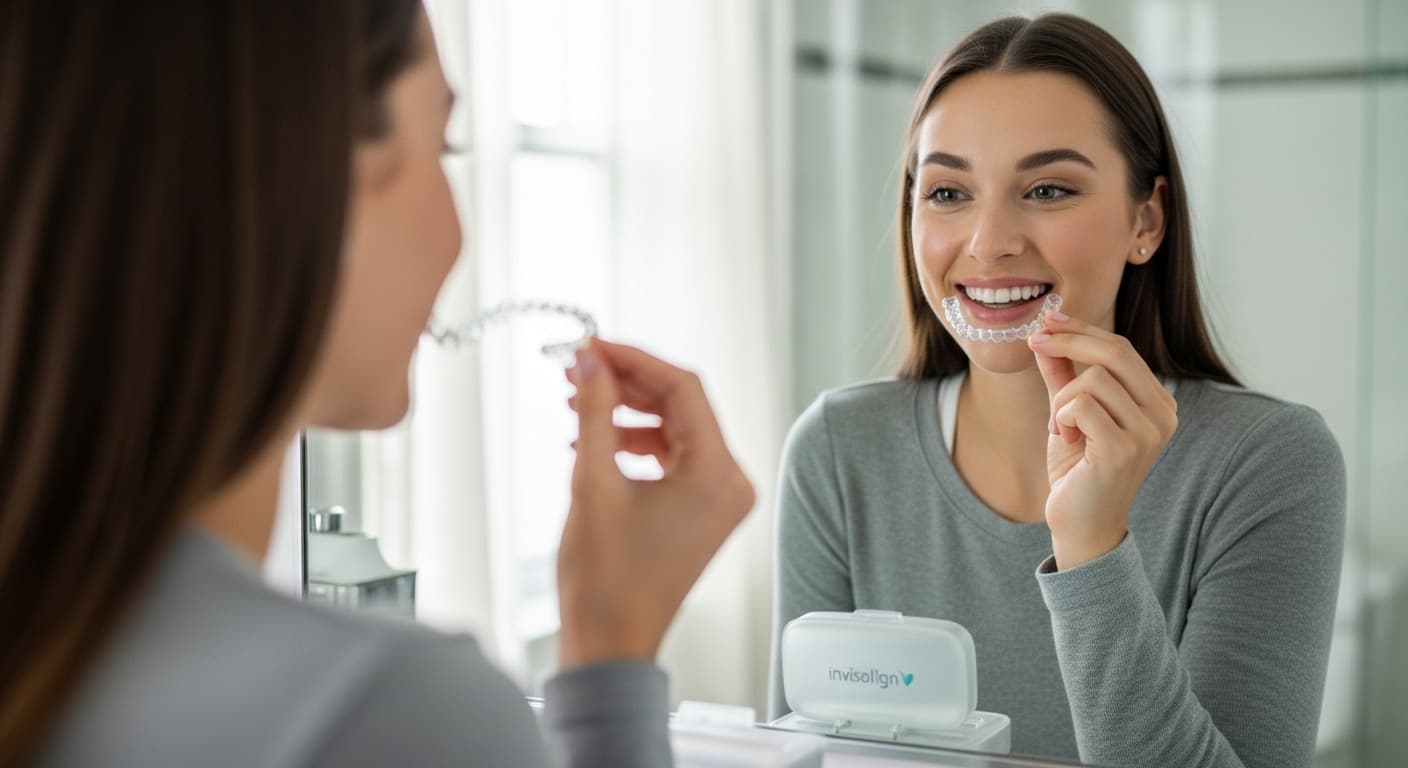
How Invisalign Treatment Works, Step by Step
1. Consultation and Digital Scan
Your first visit is a free consultation. We examine your teeth, gums and bite, take photographs and radiographs, and capture a digital scan of your arches. The scan replaces the trays of impression putty that patients used to dread — it takes a few minutes and produces a far more accurate model.
Before anything is manufactured, we address active problems. Aligners are never started over untreated decay or gum disease, so if you need fillings or a deep cleaning, that comes first. Moving teeth through inflamed periodontal tissue causes damage that is far harder to undo than the crowding you came in to fix.
2. Treatment Planning and Preview
Your scan is used to build a three-dimensional plan showing every stage of movement from your current position to the final result. You see this simulation before committing. This is the moment to say what actually bothers you about your smile — the plan can be adjusted while it is still software, and cannot be changed nearly as easily once trays are manufactured.
3. Attachments and Delivery
Most treatment plans call for attachments: small, tooth-coloured composite shapes bonded to specific teeth. They give the aligner something to grip so it can produce movements that a smooth tray cannot, such as rotating a rounded tooth or moving a root. They are removed and polished away at the end of treatment.
Some plans also include interproximal reduction, a conservative polishing of a fraction of a millimetre between selected teeth to create the space crowding requires. It is done with fine strips, is painless, and removes far less enamel than an extraction would cost you.
4. Wearing the Aligners
You wear each aligner 20 to 22 hours a day, removing them only to eat, drink anything that is not plain water, and clean your teeth. Expect pressure and mild tenderness for a day or two after switching to a new tray — that sensation is the treatment working. Switching to new aligners at bedtime lets you sleep through the most noticeable phase.
5. Progress Checks and Refinements
We review your progress every six to ten weeks. If teeth are tracking behind the plan — which happens, and is not a failure — we order refinement aligners: an additional short series to finish the case precisely. Refinements are routine and, in our practice, included in the treatment fee rather than billed as an extra.
6. Retainers
This is the stage patients underestimate, and the reason many people need treatment twice. Teeth have a memory and drift back toward their original position for the rest of your life. When active treatment ends, you receive retainers and a wear schedule: full-time initially, then nights indefinitely. A retainer is inexpensive. Repeating orthodontic treatment is not.

How Long Does Invisalign Take?
Treatment length depends on how far your teeth need to travel:
| Case complexity | Typical duration | Example |
|---|---|---|
| Minor | 4 to 6 months | Small relapse after previous braces; slight crowding of the lower front teeth |
| Moderate | 9 to 15 months | Generalised crowding, spacing, mild bite correction |
| Complex | 18 to 24 months | Significant bite correction, extraction cases, multiple rotations |
The single largest variable is not your anatomy — it is wear time. Patients who keep their aligners in for the prescribed hours finish on schedule. Patients who do not, extend their own treatment.
Invisalign vs. Traditional Braces
| Factor | Invisalign | Metal braces |
|---|---|---|
| Visibility | Nearly invisible | Clearly visible |
| Removable | Yes | No |
| Eating restrictions | None — trays come out | Avoid hard, sticky, chewy foods |
| Oral hygiene | Normal brushing and flossing | Requires threaders and interdental brushes |
| Office visits | Every 6 to 10 weeks | Roughly every 4 weeks |
| Emergencies | Rare | Loose brackets, poking wires |
| Depends on compliance | Heavily | Minimally |
| Complex skeletal cases | Sometimes limited | Broader capability |
Neither option is universally better. Braces work whether or not the patient cooperates, which for some teenagers is decisive. Aligners are more comfortable, better for oral hygiene and invisible, but only for someone who will genuinely wear them.
How Much Does Invisalign Cost in Woodland Hills?
Most patients want this answer before anything else, so here it is honestly.
In the Woodland Hills and greater Los Angeles area, Invisalign generally ranges from $3,500 to $7,500. Limited cases treating only minor front-tooth movement can fall below that range; complex full-arch cases with extractions sit at the top of it.
Your fee depends on:
- how much movement is required and how many aligners the plan needs
- whether one arch or both are being treated
- whether attachments, interproximal reduction or elastics are involved
- how many refinement stages the case is likely to need
What affects your out-of-pocket cost:
- Dental insurance. Many plans include a lifetime orthodontic benefit, commonly $1,000 to $2,500, and a growing number apply it to clear aligners exactly as they would to braces. We verify your benefits before you commit.
- FSA and HSA funds. Orthodontic treatment is an eligible expense. Paying with pre-tax dollars reduces the real cost meaningfully.
- Monthly payment plans. See payment plans — most patients here finance treatment across the months they are wearing the aligners rather than paying up front.
- Current promotions. Check current specials before your consultation.
A precise figure requires an examination, because the number of aligners your case needs cannot be estimated from a photograph. The consultation is free and ends with a written treatment plan and an exact fee — not an estimate that changes later.
Living With Invisalign — Practical Advice
Eating and drinking. Remove aligners for everything except water. Hot drinks can warp the plastic, and coffee, tea, wine and cola will stain the trays. Also: sugary drinks consumed with aligners in place bathe your teeth in sugar under a sealed tray, which is an efficient way to produce cavities.
Cleaning. Rinse the trays every time you remove them and brush them gently with a soft brush and clear, unscented soap. Toothpaste is mildly abrasive and will cloud the plastic over time. Never use hot water.
Speech. Expect a slight lisp for the first two to four days. It resolves as your tongue adapts, and reading aloud for a few minutes a day accelerates the process.
Discomfort. Pressure for 24 to 48 hours after each new tray is normal. An over-the-counter analgesic is usually more than sufficient.
Travel and habits. Keep your case with you. Aligners wrapped in a napkin get thrown away — it is by far the most common way patients lose them. Never chew gum with aligners in, and if you smoke, understand that it will stain the trays.
If you lose an aligner, call us before improvising. Depending on where you are in the series, we will direct you to move forward to the next tray or return to the previous one. Guessing can cost you weeks.
Why Choose Dr. Ahdout for Invisalign
Dr. Nader Ahdout graduated from the USC School of Dentistry in 1993 and has practised in Woodland Hills for more than three decades. His background is in restorative, cosmetic and implant dentistry — which shapes how he approaches alignment.
An orthodontic result that looks straight but leaves your bite unbalanced will show up years later as worn enamel, fractured restorations, recession or jaw discomfort. Because Dr. Ahdout spends his working life restoring teeth that failed for exactly those reasons, alignment here is planned around your entire bite, not only the teeth visible when you smile.
That perspective also matters when alignment is one part of a larger plan. Straightening teeth before placing porcelain veneers frequently means the veneers can be thinner and require less enamel reduction. Aligning teeth before implants or crowns and bridges creates the space needed for a restoration that fits properly. Sequencing these correctly is the difference between a result that lasts and one that has to be redone.
Patients also stay with this practice because of how it feels to be treated here. We are a dental spa environment, we offer sedation options for anxious patients, and we work on same-week appointments. Our Google rating is 4.6 across 80 reviews.
See real patient results in our smile gallery, or read about the digital scanning and imaging technology we use to plan treatment.
Book Your Free Invisalign Consultation
You will leave the consultation knowing whether you are a candidate, roughly how long treatment would take, exactly what it would cost, and what your insurance covers. There is no obligation and no charge.
Call (818) 340-3062 or request an appointment online.
Dr. Nader Ahdout, DDS · 22116 Ventura Blvd, Woodland Hills, CA 91364
Monday to Thursday 9:00 AM – 6:00 PM · Friday 9:00 AM – 1:30 PM
Frequently Asked Questions
How much does Invisalign cost in Woodland Hills?
Invisalign in the Woodland Hills area typically ranges from $3,500 to $7,500 depending on case complexity, whether one or both arches are treated, and how many aligners are required. Many dental plans include an orthodontic benefit of $1,000 to $2,500 that applies to clear aligners, and FSA and HSA funds are eligible. Dr. Ahdout provides an exact written fee at your free consultation.
Does Invisalign hurt?
Most patients describe pressure rather than pain. The first 24 to 48 hours after switching to a new aligner produce mild tenderness as the teeth begin to move, which over-the-counter pain relief handles easily. There are no brackets or wires to irritate the cheeks and lips, so many patients find aligners more comfortable overall than braces.
How many hours a day do I have to wear my aligners?
Twenty to twenty-two hours a day. Aligners should be removed only for eating, for drinking anything other than plain water, and for brushing and flossing. Consistent wear is the single biggest factor in finishing on schedule — inconsistent wear extends treatment and can require additional refinement aligners.
Can I get Invisalign if I already had braces as a teenager?
Yes, and it is one of the most common reasons adults seek treatment. Teeth that shifted after braces because retainers were discontinued — called orthodontic relapse — usually require only minor correction, and these cases often complete in four to six months. Retainer wear after treatment is essential to prevent it happening a third time.
Will Invisalign work on my overbite or crossbite?
In many cases, yes. Modern clear aligners routinely correct overbite, underbite, crossbite and open bite, particularly when the problem is dental rather than skeletal. Severe skeletal discrepancies may need fixed appliances or a specialist. Dr. Ahdout will tell you honestly at your consultation whether aligners can achieve your goal.
What happens after my Invisalign treatment is finished?
You receive retainers, which are essential. Teeth naturally drift back toward their original positions throughout life, so retainers are worn full-time at first and then nightly on an indefinite basis. Patients who stop wearing retainers frequently need orthodontic treatment a second time — a retainer costs a small fraction of that.
Related Services
Trusted Dentist in Woodland Hills for Comprehensive Dental Care
Schedule your free consultation with Dr. Ahdout and experience high-quality cosmetic and family dentistry tailored to your smile needs.
Visit Our Woodland Hills Office
Call Now
(818) 340-3062Opening Hours
- Mon
- 9 AM – 6 PM
- Tue
- 9 AM – 6 PM
- Wed
- 9 AM – 6 PM
- ThuToday
- 9 AM – 6 PM
- Fri
- 9 AM – 1:30 PM
- Sat
- Closed
- Sun
- Closed