
TMJ and Jaw Pain Treatment in Woodland Hills, CA
Jaw pain that will not resolve. A click every time you open your mouth. Headaches that start at the temples. Waking with a tight, aching face. Difficulty chewing anything firm.
These are symptoms of temporomandibular disorder, and they are far more common than most people realise — as is the experience of being told nothing is wrong.
Dr. Nader Ahdout has practised in Woodland Hills since 1993 and treats these cases conservatively: identify the cause, relieve the symptoms with reversible measures first, and reserve permanent changes for when they are genuinely necessary.
A note on terminology
TMJ refers to the temporomandibular joint itself — the hinge connecting your jaw to your skull, just in front of each ear. TMD is temporomandibular disorder, the condition affecting it. Most people search for "TMJ", so that is how this page is written, but the disorder is what we treat.
Symptoms
In the jaw and face:
- Pain or tenderness in the jaw, especially near the ears
- Clicking, popping or grating when opening or closing
- Locking — the jaw catching open or refusing to open fully
- Difficulty or discomfort chewing
- Facial fatigue or a tight, aching sensation
- A bite that suddenly feels different
Elsewhere, and frequently not connected to the jaw by the patient:
- Headaches, particularly in the temples on waking
- Ear pain, fullness or ringing with no ear infection — a very common reason patients see an ENT specialist first
- Neck and shoulder tension
- Dizziness
- Tooth sensitivity or pain with no decay present
That last group is why TMD is so often missed. Patients see a physician for headaches, an ENT for ear symptoms, and a physiotherapist for neck tension, without anyone examining the jaw joint.
Causes
TMD usually has more than one contributing factor:
- Bruxism — grinding and clenching, often during sleep and often unnoticed until a partner mentions it or a dentist sees the wear
- Stress, which drives clenching directly
- Bite problems: a malocclusion, missing teeth causing the bite to collapse, or a restoration sitting slightly high
- Disc displacement, where the small cartilage cushion inside the joint slips out of position — the usual cause of clicking
- Arthritis affecting the joint
- Trauma to the jaw or a whiplash injury
- Joint hypermobility
- Habits: chewing gum constantly, nail biting, holding a phone against the shoulder, poor posture
The Sleep Apnea Connection
Grinding and obstructive sleep apnea frequently occur together. One proposed explanation is that grinding is part of the body's arousal response to an airway obstruction — the jaw thrusts forward to reopen the airway.
The practical implication matters: a patient treated only with a night guard, whose grinding is actually driven by an untreated airway problem, has had the symptom managed and the cause ignored. When we see grinding alongside loud snoring, morning headaches and daytime sleepiness, we discuss sleep apnea evaluation and refer for a sleep study.
Diagnosis
- History: when symptoms began, what makes them better or worse, stress levels, sleep quality, previous dental work, any trauma
- Examination of the joints, palpating them as you open and close, measuring range of motion, and listening for clicking or crepitus
- Palpation of the muscles of mastication, neck and shoulders to locate tenderness and trigger points
- Bite analysis to identify interferences, premature contacts and areas of overload
- Wear pattern assessment, which shows how your teeth have actually been functioning
- Imaging — radiographs, and 3D imaging where joint structure needs assessment. See our technology
We also rule out other causes. Not all facial pain is TMD. Dental infection, sinus disease, trigeminal neuralgia, and neck pathology can all mimic it, and each requires different treatment.
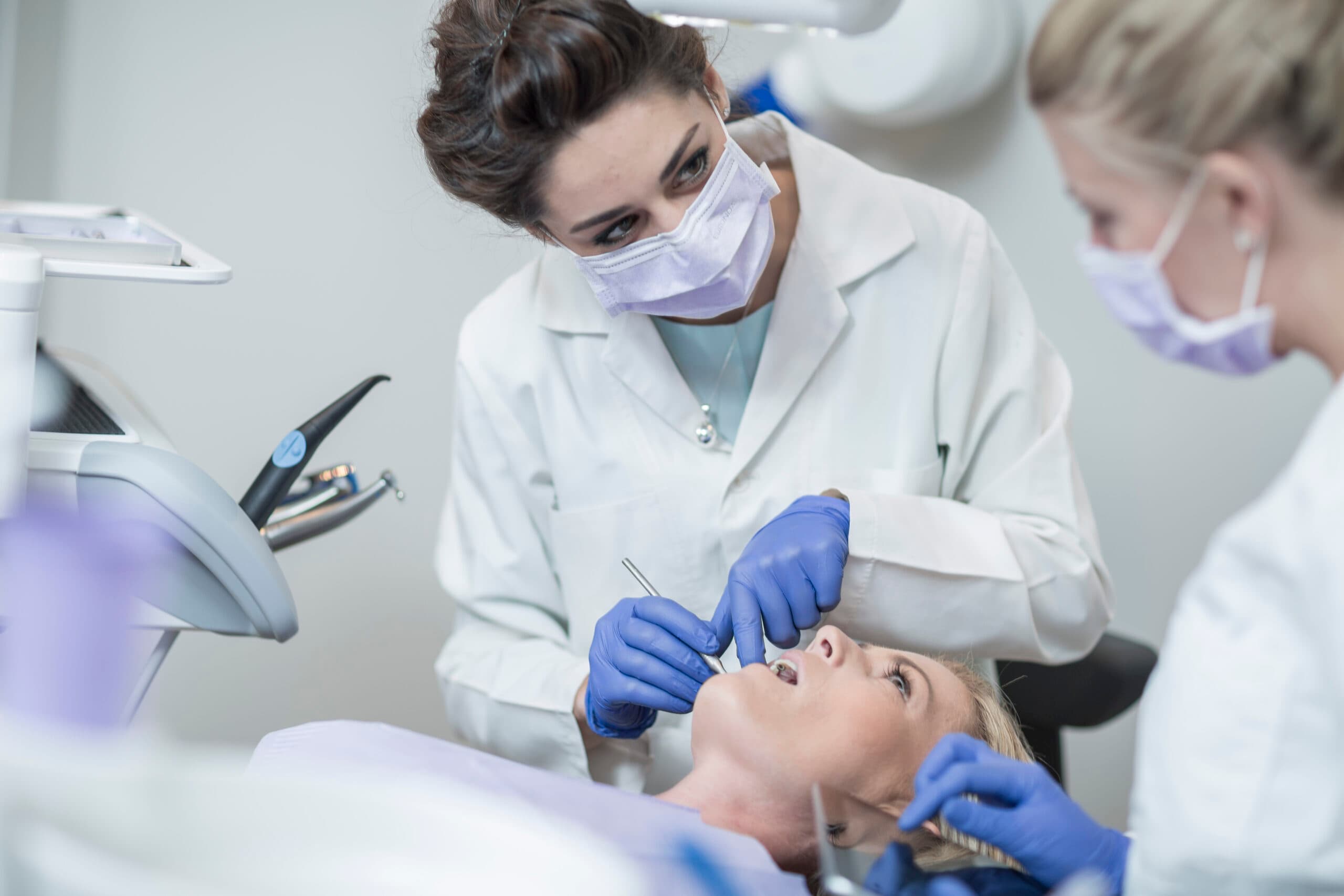
Treatment — Conservative First
This principle deserves emphasis, because it is where a great deal of harm is done in this field.
Most TMD improves with reversible, conservative treatment. Irreversible interventions — grinding down teeth to adjust the bite, extensive crown work, orthodontics or surgery — should not be first-line. They cannot be undone if they do not help, and a substantial number of patients have had permanent alterations made to their bite for a condition that would have settled with a splint and time.
If any provider proposes reshaping your teeth or extensive restorative work as an initial treatment for jaw pain, seek a second opinion.
Self-Care and Behaviour Change
Often more effective than patients expect:
- Soft diet temporarily. Avoid hard, chewy and crunchy foods, and cut food into small pieces
- Stop gum chewing entirely
- Do not open wide. Support your jaw when you yawn
- Moist heat for muscle tension; ice for acute joint inflammation
- Awareness training. Teeth should be apart at rest — lips together, teeth slightly separated, tongue on the palate. Most clenchers hold their teeth in contact all day without noticing
- Stress management. Sleep, exercise and relaxation techniques genuinely reduce clenching
- Posture, particularly forward head posture from desk work
Occlusal Splint (Night Guard)
The foundation of conservative treatment. A custom appliance worn at night that:
- prevents tooth surfaces contacting, so grinding cannot damage them further
- distributes force evenly across the arch rather than concentrating it
- relaxes the muscles by providing a stable, even contact position
- protects existing restorations
A custom splint is not the same as a drugstore boil-and-bite guard. A retail guard is bulky, fits poorly, and provides uneven contact that can worsen muscle activity in some patients — and its soft material invites chewing, which increases muscle work rather than reducing it. A custom splint is made from your own scans to a specific thickness and contact scheme.
Physical Therapy and Exercises
Targeted jaw exercises, stretching, massage and posture work. We provide a home programme and refer to physiotherapists experienced in temporomandibular treatment for cases needing hands-on care.
Medication
Anti-inflammatories for acute pain, muscle relaxants for short-term use in severe muscle spasm, and in some chronic cases low-dose medication prescribed by a physician. Medication manages symptoms while the underlying cause is addressed; it is not a treatment on its own.
Bite Correction — When It Is Genuinely Indicated
Where a clear occlusal cause exists and conservative measures have not resolved symptoms, correcting the bite may be appropriate:
- Adjusting a single high restoration — minor and often immediately effective
- Replacing missing teeth that have allowed the bite to collapse, with implants or bridges
- Orthodontic correction of a malocclusion
- Full mouth reconstruction where wear has destroyed the vertical dimension
These follow diagnosis and a trial of conservative therapy. They do not precede it.
Referral
Cases involving significant internal joint derangement, degenerative joint disease or failure of conservative therapy are referred to an oral and maxillofacial surgeon or an orofacial pain specialist. Surgery is a last resort for a small minority of patients.
What Recovery Looks Like
Most patients improve substantially within four to twelve weeks of consistent conservative treatment. Muscle-driven pain typically responds fastest — often within weeks of starting splint therapy and behaviour change. Disc displacement with clicking may improve in symptoms while the click itself persists, which is generally acceptable if there is no pain or locking.
Chronic cases of many years' standing take longer and may require ongoing management rather than complete resolution.
Being honest about this matters. TMD is frequently a condition to be managed rather than cured outright, particularly where arthritis or long-standing joint changes are involved. Anyone promising a permanent cure for all TMD is overstating what the evidence supports.
Cost
| Item | Typical range |
|---|---|
| Comprehensive TMJ examination and diagnosis | $150 – $400 |
| Custom occlusal splint / night guard | $500 – $1,200 |
| Occlusal adjustment | $200 – $600 |
| 3D imaging when indicated | $150 – $400 |
Dental insurance frequently covers a portion of occlusal splints, and some medical plans cover TMD treatment. Coverage varies considerably, and our team verifies your benefits before treatment. See payment plans for financing on larger cases.
Set against the alternative, this is inexpensive. Untreated bruxism destroys enamel, fractures teeth and cracks restorations. A splint costs a fraction of the crowns it prevents.
Why Choose Dr. Ahdout
- Thirty-plus years in restorative practice, USC-trained, with extensive experience in bite analysis — TMD is fundamentally a problem of how a bite functions
- Conservative philosophy. Reversible treatment first, always. Permanent changes only when diagnosis genuinely supports them
- The whole picture assessed, including screening for the sleep apnea connection that is so often missed
- Custom splints made properly from digital scans, with the fit and contact scheme verified and adjusted
- Referral when appropriate. If your case needs a specialist, we will say so
- Sedation options for patients who find dental treatment stressful — which, for a condition driven partly by clenching, is not a trivial consideration
- 4.6 stars across 80 Google reviews, same-week appointments
Get Relief — Book an Evaluation
If you have lived with jaw pain, clicking or unexplained headaches, a proper evaluation will identify what is actually driving it. Most patients start feeling better with treatment that is simple, reversible and inexpensive.
Call (818) 340-3062 or book online.
Dr. Nader Ahdout, DDS · 22116 Ventura Blvd, Woodland Hills, CA 91364
Monday to Thursday 9:00 AM – 6:00 PM · Friday 9:00 AM – 1:30 PM
Frequently Asked Questions
What does TMJ treatment cost in Woodland Hills?
A comprehensive TMJ examination typically costs $150 to $400, and a custom occlusal splint $500 to $1,200. Occlusal adjustment ranges from $200 to $600. Dental insurance frequently covers part of the cost of splints, and some medical plans cover TMD treatment, so benefits are worth verifying before treatment begins.
Can TMJ go away on its own?
Mild cases triggered by a temporary stressor or a short-term habit sometimes resolve without treatment. Persistent symptoms usually do not, particularly when driven by ongoing bruxism or a bite problem, because the cause remains active. Most patients improve substantially within four to twelve weeks of conservative treatment such as splint therapy and behaviour change.
Is a drugstore night guard as good as a custom one?
No. Retail boil-and-bite guards are bulky, fit poorly, and provide uneven contact that can worsen muscle activity in some patients. Their soft material also invites chewing, which increases muscle work rather than reducing it. A custom splint is fabricated from digital scans to a specific thickness and contact scheme, then adjusted in the mouth.
Should I have my bite adjusted or my teeth reshaped to fix TMJ?
Not as a first treatment. Most TMD improves with reversible, conservative care, and irreversible interventions such as grinding down teeth cannot be undone if they do not help. Bite correction is appropriate when a clear occlusal cause is identified and conservative therapy has not resolved symptoms — not before. If a provider proposes reshaping teeth as an initial treatment, seek a second opinion.
Why does my jaw click, and is it serious?
Clicking usually indicates that the small cartilage disc inside the joint is slipping out of position as you open and returning as you close. Painless clicking without locking is common and often does not require treatment. Clicking accompanied by pain, locking, or a change in how far you can open should be evaluated.
Can teeth grinding be related to sleep apnea?
Frequently, yes. Grinding and obstructive sleep apnea often occur together, and one explanation is that grinding forms part of the body's arousal response to airway obstruction. This matters clinically: treating grinding with a night guard alone, when an untreated airway problem is driving it, manages the symptom while ignoring the cause. Loud snoring, morning headaches and daytime sleepiness alongside grinding warrant a sleep evaluation.
Trusted Dentist in Woodland Hills for Comprehensive Dental Care
Schedule your free consultation with Dr. Ahdout and experience high-quality cosmetic and family dentistry tailored to your smile needs.
Visit Our Woodland Hills Office
Call Now
(818) 340-3062Opening Hours
- Mon
- 9 AM – 6 PM
- Tue
- 9 AM – 6 PM
- Wed
- 9 AM – 6 PM
- ThuToday
- 9 AM – 6 PM
- Fri
- 9 AM – 1:30 PM
- Sat
- Closed
- Sun
- Closed