If you’re weighing dental implants in Woodland Hills, you’ve likely wondered whether to see an implant-focused general dentist or an oral and maxillofacial surgeon. The short answer is that both can play vital roles, and the best choice depends on your needs, your comfort, and the way your care team collaborates. Around the Valley—between morning commutes on the 101 and weekend strolls along Ventura Boulevard—patients often find that the most seamless experiences happen when their providers communicate clearly and design the plan together. Starting your journey with an experienced implant dentist can help you map out the steps and determine whether additional surgical expertise is recommended for your case.
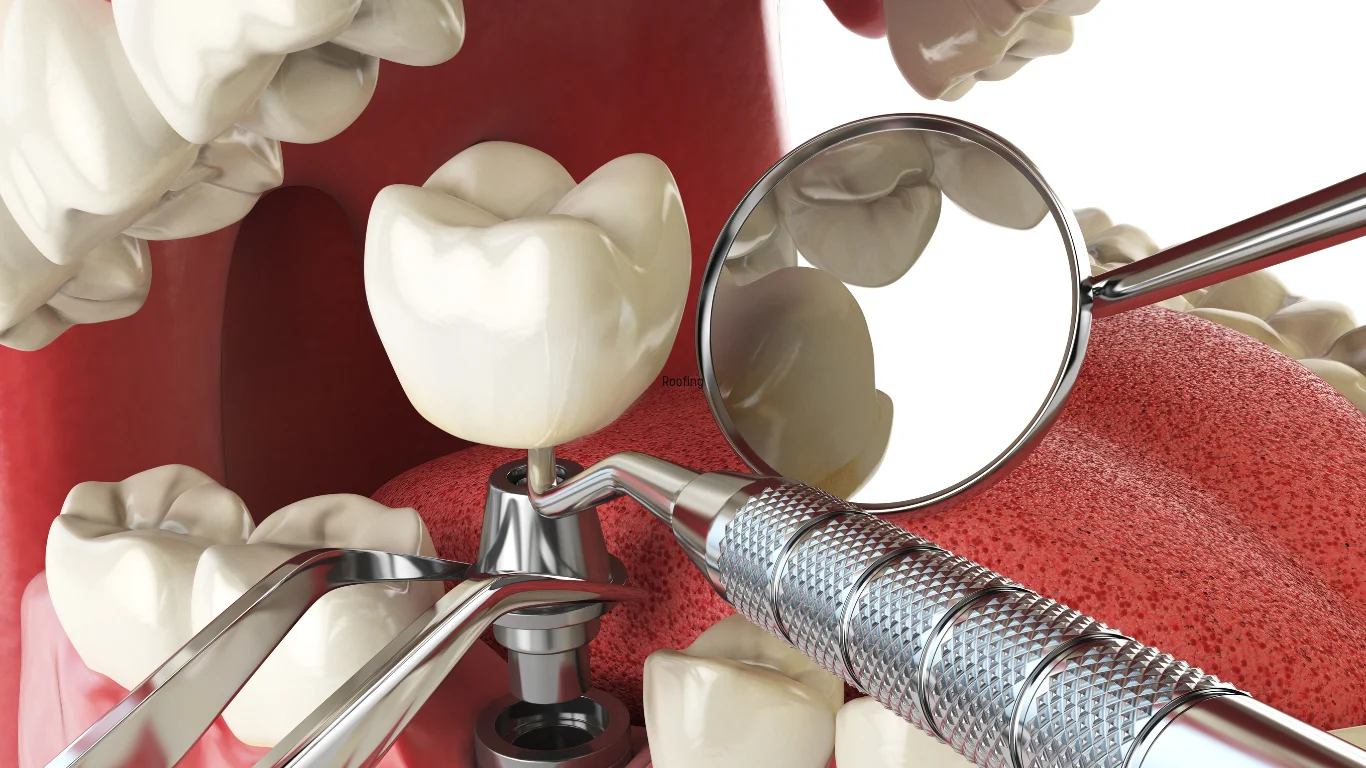
Dental implants involve two broad phases: surgical placement of the implant itself and the restorative work that gives the final tooth its shape, color, and bite. Some implant dentists perform both phases. Others collaborate with oral surgeons for the surgical portion while taking the lead on the restoration. What matters most is that your plan is individualized. Your anatomy, health history, and goals drive decisions about who does what and when.
Training paths and skill sets
Implant-focused general dentists pursue extensive continuing education in implant surgery and restoration, often training with mentors and completing residencies, fellowships, or coursework that emphasizes diagnostics, guided surgery, and prosthetic design. Their strengths typically include comprehensive case coordination, bite design, and the nuanced aesthetics that make a new tooth blend naturally with its neighbors.
Oral and maxillofacial surgeons complete hospital-based residencies that cover complex surgery, management of facial trauma, and sedation and anesthesia. Their training equips them for advanced bone grafting, sinus procedures, management of impacted teeth, and challenging anatomy. In Woodland Hills, many excellent outcomes come from teams that combine the restorative vision of the implant dentist with the surgical depth of the oral surgeon.
When a single clinician is ideal
Candidates with straightforward anatomy, healthy gums, and clear restorative goals may benefit from a single clinician handling both phases. This can simplify scheduling, reduce handoffs, and give you one point of contact. A dentist who routinely places and restores implants can ensure that the surgical placement anticipates the final crown’s shape and bite from the outset—an approach often called “restoratively driven planning.”
That said, even in streamlined cases, your provider should explain backup plans for scenarios that might call for specialist involvement. This proactive thinking is a sign that you’re in experienced hands.
When a team approach shines
More complex cases—such as those involving bone deficiency, sinus considerations, or multiple implants—often benefit from a co-managed plan. An oral surgeon may handle the grafting and placement steps, while the implant dentist oversees the overall design, coordinates the timeline, and fabricates the final restorations. In this model, each expert contributes their strengths, and you gain the reassurance that decisions are peer-reviewed and aligned with your goals.
Collaboration also helps when your case intersects with other needs, such as temporomandibular joint concerns or a history of clenching and grinding. The restorative lead can balance bite forces, and the surgical partner can ensure the foundation supports that plan.
Imaging and guided planning
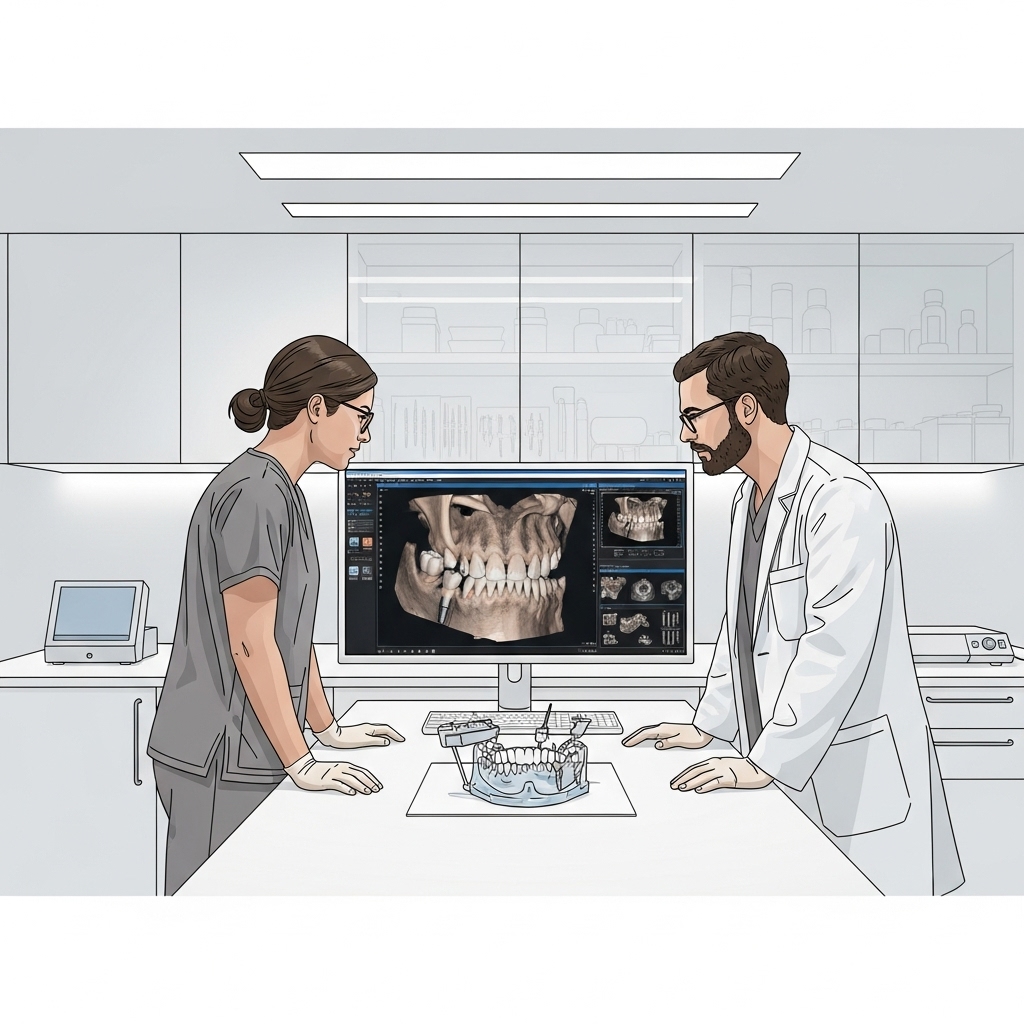
Whether you work with one provider or a team, expect thorough imaging. Three-dimensional scans reveal bone contours, nerve pathways, and sinus positions, informing safe, precise placement. When used with digital planning software, your providers can design the implant position to support a crown that looks natural and functions comfortably. Surgical guides translate that plan into a precise pathway during the procedure, increasing predictability and reducing surprises.
In practical terms, this means a smoother experience for you on treatment day and a final result that fits seamlessly into your bite. You’ll also benefit from clear visual explanations as your providers review scans and photographs, helping you understand the reasons behind every decision.
Anesthesia, comfort, and recovery
Both implant dentists and oral surgeons are trained to keep you comfortable. Local anesthesia is the baseline, and some cases call for additional calming options. Oral surgeons have extensive training in sedation and general anesthesia, which can be helpful for complex or lengthy procedures. Your providers will discuss what’s appropriate for your health history and preferences.
After surgery, you’ll receive guidance for home care, what to expect in the first days, and when to return for check-ins. In a coordinated model, both offices communicate so you know exactly whom to contact with questions and how your next steps unfold.
Who leads the restorative vision?
Even when a surgeon places the implant, the restorative dentist often directs the aesthetic and functional design. This includes determining the ideal emergence profile of the crown, selecting materials, and fine-tuning the bite. Clear leadership on the restorative side protects the natural look of your smile and ensures chewing comfort. Many patients appreciate that their implant dentist remains their primary contact throughout the journey, even as surgical partners step in at key moments.
As you consider options in Woodland Hills, remember that the right answer is the one that aligns with your goals, health, and comfort level. A good starting point is to sit down with a local implant dentist, review your scans, and discuss whether a team approach will add value to your case.
Frequently Asked Questions
Which is better for dental implants: an implant dentist or an oral surgeon?
Neither is universally better. The best choice depends on your case. Straightforward needs may be managed by an experienced implant dentist, while complex anatomy or additional procedures can benefit from an oral surgeon’s training. Many of the best outcomes come from collaboration between the two.
Do I need both providers?
Not always. Your evaluation will clarify whether a single clinician can manage both phases or whether a collaborative plan is advisable. The most important factors are communication, clear responsibilities, and a shared commitment to your goals.
Who designs the final crown?
The restorative dentist typically leads the design of the final restoration, coordinating with the lab and ensuring the bite and aesthetics align. Even when a surgeon places the implant, restorative planning guides placement decisions.
What about sedation?
Both provider types can keep you comfortable with local anesthesia. For more involved cases, oral surgeons offer a broader range of sedation options. Your health history and preferences will inform the best approach.
How do imaging and guided surgery help?
Three-dimensional scans and surgical guides allow precise planning and placement, improving predictability and comfort. These tools help your team avoid anatomical risks and align the implant with your final crown for a natural look and feel.
Will my timeline change if two offices are involved?
It can, but well-coordinated teams outline the schedule clearly and minimize extra steps. Expect detailed instructions and check-ins so you always know what’s next.
Ready to chart the right path for your smile? Schedule a consultation with a Woodland Hills implant dentist who can evaluate your needs, coordinate any necessary specialists, and guide you from first scan to final polish with clear, caring communication.